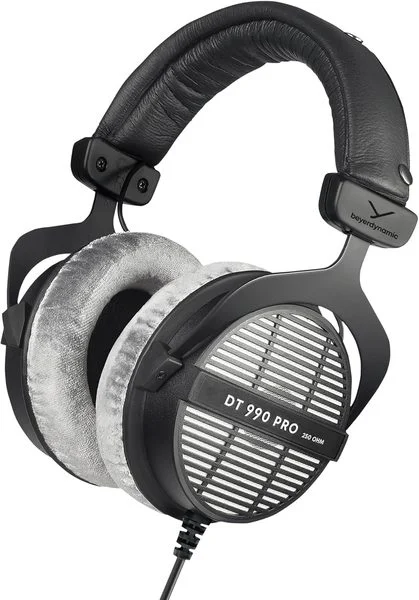
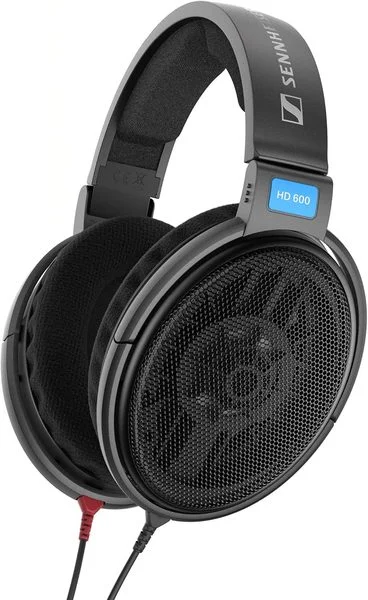
Our Top Picks
The classical benchmark for nearly three decades. Neutral response, precise imaging, natural string and wind timbre.
The widest soundstage of the group — the pick for Mahler, Bruckner, and large Romantic orchestras.
The budget entry into reference-grade classical listening. Neutral, detailed, and usable without an amp.
What Classical Music Demands from Headphones
Classical music is the most demanding genre for headphone reproduction because of:
- Dynamic range: From barely audible pianissimo to full-orchestra fortissimo — up to 60dB of range in a single movement
- Soundstage accuracy: An orchestra spans 20+ meters on stage; the recording captures depth, width, and section positioning that a good headphone can reproduce
- Tonal accuracy: Strings, brass, woodwinds, and percussion each have characteristic overtones — a colored headphone distorts the balance the recording engineer captured
- Resolution: Subtle counterpoint, inner voices in the string section, harp accompaniment — a resolving headphone reveals what budget options obscure
If terms like impedance and amp requirements are new, the two short explainers to read first are What is headphone impedance? and Do I need a headphone amp? .
Best Overall: Sennheiser HD 600
Price: ~$269 | Impedance: 300Ω | Character: Neutral reference
The HD 600 is the classical music headphone recommendation that has been consistent for nearly three decades, and for good reason. Its frequency response closely follows the Harman target curve: slightly rolled-off sub-bass, smooth mids, controlled treble with a presence peak at 3kHz that gives violin and cello their characteristic forwardness without harshness.
For orchestral music, the HD 600’s imaging precision is exceptional. Section boundaries are clear — you can identify the position of the first violin section, the brass behind them, and the percussion at the rear with well-recorded orchestral recordings.
Requires a dedicated amplifier. The Schiit Magni Heresy ($109) drives it well; the Asgard 3 ($199) adds warmth that some listeners prefer for late-evening chamber music sessions. The full amp ranking for this headphone, with the power math, is in the HD 600 amp pairing guide , and the complete sound breakdown is in the HD 600 review .
Best for: Symphonic works, chamber music, solo piano, lieder, opera
Best for Wide Soundstage: AKG K712 Pro
Price: ~$299 | Impedance: 62Ω | Character: Open, wide soundstage
The AKG K712 Pro has a wider soundstage than the HD 600 — particularly strong left-right separation — which makes it compelling for large-scale orchestral works where physical breadth matters. Its tuning is slightly warm compared to the HD 600, with more bass presence that benefits full-orchestra recordings.
The K712 is also easier to drive (62Ω, 105dB/mW) — it performs well from the Magni Heresy and adequately from better laptop outputs. Amp options are ranked in the K712 Pro pairing guide .
Less precise in imaging than the HD 600 but with a grander, more expansive presentation. Some listeners prefer it for Bruckner, Mahler, and large Romantic works. The HD 600 is preferred for chamber music and Baroque.
Best for: Large-scale orchestral works, Romantic period music, opera
Best Budget Classical Headphone: Sennheiser HD 560S
Price: ~$179 | Impedance: 120Ω | Character: Neutral, analytical
The HD 560S is the most cost-effective Sennheiser open-back for classical music. It uses a newer driver than the HD 600 and has a slightly more forward treble — more detail-revealing but potentially harsher on bright recordings. For listeners who want HD 600 character at a lower price point, the HD 560S is the closest.
Less midrange warmth than the HD 600 — strings are slightly drier. But at roughly $100 less, it’s an excellent entry into serious classical headphone listening, and at 120Ω it’s the one pick here that performs acceptably straight from a good laptop output. Whether it’s worth adding an amp anyway is settled, with the math, in the HD 560S pairing guide .
Best for: Budget-conscious classical listeners; entry into open-back reference headphones
Best for Warmth and Long Sessions: Sennheiser HD 650
Price: ~$329 | Impedance: 300Ω | Character: Warm, musical
For classical listeners who prioritize long-session comfort and emotional engagement over clinical accuracy, the HD 650 is the HD 600’s warmer sibling. Its slightly elevated bass and reduced upper treble create a rich, intimate presentation — ideal for late-night Schubert or Brahms.
The HD 650 is not the more technically “accurate” choice (that’s the HD 600), but it’s the choice many serious classical listeners end up with for primary enjoyment listening because it’s more forgiving of mediocre recordings and less fatiguing over hours. The full HD 650 review covers the tuning in detail, and the HD 600 vs HD 650 comparison settles the sibling question.
Best for: Chamber music, vocal works, long listening sessions; older recordings with limited high-frequency content
Which Pick for Which Repertoire
| You mostly listen to | Buy | Why |
|---|---|---|
| Symphonies, general orchestral | HD 600 | Neutral balance and section imaging; the safe first choice |
| Mahler, Bruckner, Wagner, opera | K712 Pro | Width matters more than pinpoint imaging at this scale |
| Chamber music, string quartets | HD 600 | Timbre and inner-voice resolution over width |
| Solo piano | HD 600 or HD 560S | Even response through the piano’s full range; no mid-bass bloom |
| Lieder, choral, early vocal music | HD 650 | Warmth flatters voices; treble roll-off forgives older recordings |
| Baroque, period instruments | HD 560S or HD 600 | Forward treble detail suits harpsichord and gut strings |
| Historical mono/early stereo recordings | HD 650 | The least punishing top end for tape hiss and limited bandwidth |
Recordings That Reveal the Differences
These are the kinds of recordings worth auditioning with, and what to listen for on each:
| Recording type | What it tests | What a good headphone shows |
|---|---|---|
| Large orchestral tutti (e.g. a Mahler symphony finale) | Dynamic range, congestion | Sections stay separated at fortissimo instead of collapsing into a wall |
| String quartet | Timbre, imaging | Four distinct positions; cello body without boom; violin sheen without edge |
| Solo piano recital | Tonal evenness, decay | Consistent weight from bass strings to top octave; audible pedal and room decay |
| Opera or oratorio with soloists and chorus | Depth layering | Soloists in front of the chorus, chorus in front of the orchestra — three planes, not one |
| Harpsichord or period ensemble | Treble quality | Attack and texture without brittleness or smearing |
What to Avoid for Classical Music
- V-shaped headphones (DT 770, most gaming headsets): Exaggerated bass and treble mask the midrange where most instrumental detail lives in classical music
- Closed-back headphones: The limited soundstage distorts orchestral spatial relationships
- Noise-cancelling headphones: ANC processing alters frequency response and introduces latency/artifacts — poor for high-resolution classical listening
- Bass-heavy tunings: Classical music’s low end should extend naturally — bass boost distorts orchestral balance
Recommended System
For the best classical music experience under $400: Sennheiser HD 600 ($269) + Schiit Magni Heresy ($109) + Schiit Modi ($59) = $437 total. This is a reference-grade classical listening system that most audiophile headphone rigs costing $1,000+ cannot clearly improve upon. If you’d rather have DAC and amp in one box, the best DAC/amp combos under $200 list covers the alternatives.
Related: Best headphones for jazz · Best headphones under $300 · HD 600 review · Best amp for HD 600